Where an attached backyard deck meets the house.
Flashing a shed roof to a wall.
Drip edge metal valley flashing dormer chimney and kick out flashing shed water away from the connections between roofs walls chimneys and other building assemblies this collection of 18 articles animations and videos identifies the critical roof flashing areas illustrates durable roof flashing details and shows how to flash roofs.
Bigger step flashing is better.
Flashing provides the extra protection these spots need.
Above a lower roof where it abuts the wall.
These problem areas include the edges of skylights and chimneys soil stacks vent fans and roof valleys as well as the intersection of the roof deck and dormer walls.
The easiest way to accomplish this is by using smartvent as an off wall shed exhaust ventilating the shed roof without removing the existing flashing and siding off of the shed wall means one less hassle and one less chance of having the expense to replace the wall siding and losing the bid.
That lip is then set into a reglet or groove in this case cut into the mortar joint of the brick wall above.
Roof leg and a 7 in.
Finally the housewrap can be laid up on the wall to cover the top of the kickout diverter and step flashings.
The edge of the roof has thin metal flashing that helps water drip off the roof without damaging the home or causing a leak.
In all cases make sure to detail the flashing membrane so that it sheds water.
Often with new construction the roof flashing is first nailed to the wall.
There sometimes is a problem with movement differences of the wall and the roof decking when the flashing is fastened to both the wall and the roof.
Under the eaves of a roof with little overhang and no gutters.
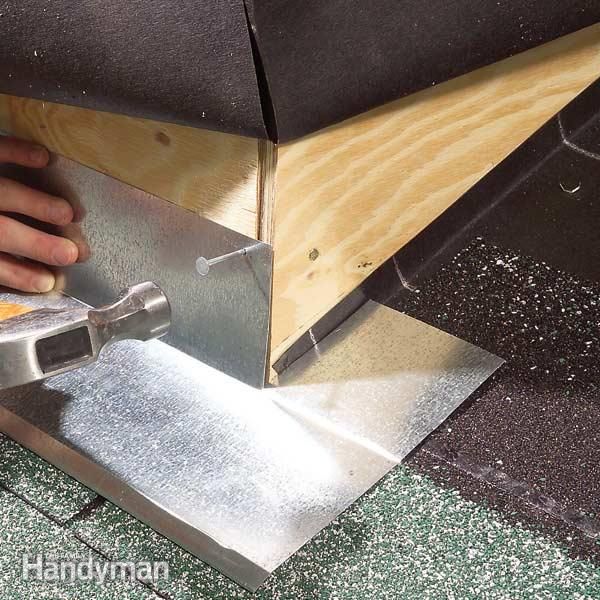
Stepped flashing is used where a sloped shingled roof intersects a vertical wall.
Proper roof wall flashing example.
It should tuck under the sheathing wrap above and over the flashing below.
Most flashing is made of galvanized metal but diy ers may prefer aluminum flashing because it s easier to bend.
Step flashings are interwoven with the shingles and act essentially as shingles with an upturned leg to allow a transition of the vertical drainage plane of the wall to the drainage plane of the roof.
While some skylight manufacturers include flashing in their products sometimes roofing professionals have to create it or purchase it separately.
Open valleys have metal flashing to protect this critical area of the roof.
Then the house wrap and exterior wall covering are installed over this roof flashing.